
The Emotional Toll of Trying to Conceive: A Guide to Fertility Mental Health


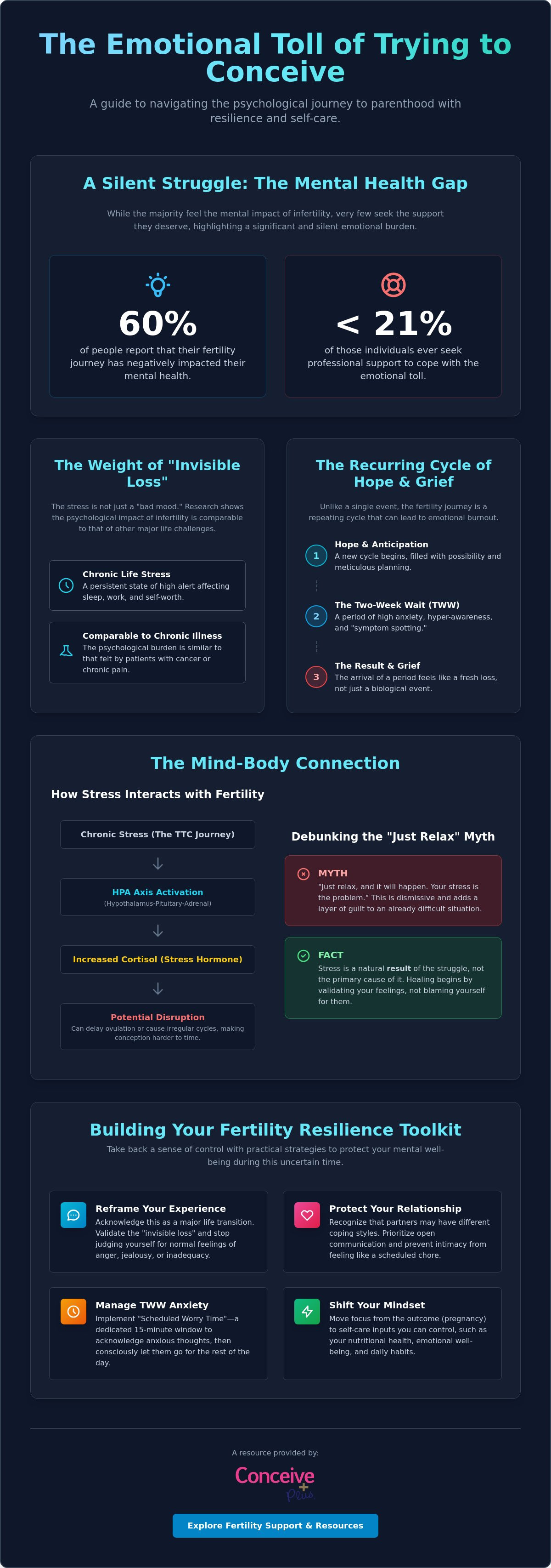
Did you know that while 60% of people report that infertility has impacted their mental health, less than 21% of those individuals ever seek professional support? This gap highlights the heavy, often silent, emotional toll of trying to conceive. It is a burden that can make you feel defective or isolated from a world that seems to move forward without you. You aren't alone in feeling like the monthly cycle of hope and grief is wearing you down, or that your once-easy intimacy with your partner has become a scheduled chore.
We understand that the psychological journey is just as demanding as the physical one. You deserve validation for the frustration and anxiety you're feeling right now. Our goal is to help you regain a sense of control and peace during this uncertain time. By reading this guide, you'll discover how to navigate these psychological challenges, validate your complex feelings, and build a personalized resilience toolkit for the path to parenthood.
We will explore practical ways to manage the intense anxiety of the Two Week Wait, along with strategies to maintain a healthy, connected relationship with your partner. It's time to prioritize your mental health as much as your physical fertility.
Key Takeaways
- Reframe your experience as chronic life stress to validate the "invisible loss" of a child who hasn't arrived yet.
- Understand the biological link between your HPA axis and reproductive health to see how cortisol can impact cycle regularity.
- Protect your relationship by navigating differing coping styles and preventing intimacy from feeling like a chore.
- Build a resilience toolkit featuring "Scheduled Worry Time" to manage the emotional toll of trying to conceive.
- Shift your mindset from outcome-based goals to a self-care focus that prioritizes your nutritional and emotional health.
What Is the Emotional Toll of Trying to Conceive?
When people talk about fertility, they often focus on vitamins, timing, and doctor appointments. However, the emotional toll of trying to conceive is often the heaviest part of the journey. This isn't just a temporary mood or a "bad month"; it's a form of chronic life stress. Research suggests that the psychological impact of infertility is comparable to that of patients facing cancer or chronic pain. It's a persistent state of high alert that affects your sleep, your work, and your sense of self.
One of the most difficult aspects of this experience is invisible loss; the act of grieving a child that hasn't arrived yet and a future you've already started planning in your mind. This type of grief is unique because it's recurring. Unlike a traditional loss where there is a beginning and an end to the mourning process, the Psychological effects of infertility involve a cycle of hope and loss that resets every few weeks. This can lead to significant TTC burnout. You might notice symptoms like deep fatigue, irritability, or a sudden desire to withdraw from social situations, especially those involving children or pregnant friends.
We also need to address the "just relax" myth. Telling someone to "just relax" is both dismissive and factually incorrect. It implies that your stress is the primary reason you aren't pregnant, which adds a layer of guilt to an already difficult situation. While high stress can affect your body, the stress of the journey is a result of the struggle, not the cause of it. It's a natural reaction to a challenging life event.
The Cycle of Hope and Disappointment
The fertility journey is often a monthly rollercoaster. It begins with the hope of a new cycle, often tracked meticulously with an ovulation calculator to ensure perfect timing. This leads into the "Two Week Wait," where magical thinking often takes over. You might find yourself searching for tiny "signs" of pregnancy in every physical sensation, like a specific twinge or a change in appetite. When a period arrives, it isn't just a biological event; it feels like a fresh trauma. Repeating this month after month can leave you feeling emotionally raw and depleted.
Why Validation Is Your First Step Toward Recovery
Healing begins when you stop judging yourself for your emotions. It's normal to feel flashes of anger when you see another pregnancy announcement or to feel inadequate when your body doesn't do what you expect it to do. Acknowledging that the emotional toll of trying to conceive is a major life transition is essential for your well-being. Normalizing these feelings of jealousy and inadequacy helps reduce the power they have over you. The emotional toll of trying to conceive is a valid medical consideration that requires the same clinical attention as physical reproductive health factors.
The Science of Stress: How Emotions and Fertility Interact
The connection between your mind and your reproductive system isn't just "all in your head." It's rooted in the Hypothalamic-Pituitary-Adrenal (HPA) axis, which is your body's sophisticated stress management system. When you face the persistent emotional toll of trying to conceive, your brain perceives a constant threat. This triggers the release of cortisol, a hormone that, in high amounts, can disrupt the delicate communication between the brain and the ovaries. This disruption can potentially delay ovulation or cause your cycle to become irregular, making it even harder to track your most fertile days with precision.
Many people find themselves trapped in a "stress paradox." They worry that their anxiety is the very thing preventing conception, which creates a secondary layer of panic. It's important to remember that human reproduction is incredibly hardy; people have conceived in high-stress environments throughout history. However, reducing the noise in your mind can make the process more bearable. One way to reclaim power is to shift from emotional guesswork to physiological data. You might consider looking into fertility support bundles that provide essential nutrients to support your body's natural functions during these high-pressure periods.
Managing the 'Two Week Wait' (TWW) Anxiety
The time between ovulation and your expected period is often the most taxing phase. The silent struggles of fertility are most visible here, as many fall into the trap of "symptom spotting." You might interpret a mild backache or a specific food craving as a definitive sign of pregnancy. This obsessive checking keeps your nervous system in a state of hyper-arousal. To combat this, lean on technology for clarity. Using an ovulation calculator helps you confirm your window with precision, allowing you to trust the data rather than your fluctuating emotions.
The Impact of Hormones on Your Emotional State
Your internal chemistry changes significantly during the second half of your cycle. As progesterone rises during the luteal phase, it can cause mood swings, breast tenderness, and fatigue. These physical symptoms often mirror early pregnancy, which creates a cruel psychological tease. It's also common for these hormonal shifts to exacerbate existing anxiety. You should monitor whether these feelings lift once your period starts; if they don't, it may be a sign of clinical depression rather than standard TTC stress. A stress-induced cycle delay can further fuel the anxiety loop by creating a "false hope" period where your cycle is late simply because ovulation was postponed by high cortisol levels.
Navigating the Impact on Relationships and Social Life
Trying to grow your family can ironically put a massive strain on the relationship you've already built. The emotional toll of trying to conceive often manifests as a slow erosion of intimacy and connection. When sex becomes a task on a calendar, it loses its role as a source of bonding and pleasure. This transition into "scheduled sex" can lead to deep seated resentment between partners. One person might feel like a biological tool, while the other feels the heavy weight of managing the entire process alone. It's a shift that can turn your bedroom into a boardroom.
You might notice that you and your partner cope in vastly different ways. It's common for one person to become hyper focused on every detail while the other appears "checked out." Usually, the partner who seems indifferent is actually using withdrawal as a defense mechanism against the same grief you feel. Without open dialogue, these differing styles create a wall of silence. When TTC becomes your entire identity, you risk losing the hobbies and social connections that keep you grounded. This isolation only makes the journey feel longer and more difficult.
Protecting Your Partnership During TTC
Reclaiming your relationship requires intentional boundaries. Establish "TTC free" zones or specific times where you agree not to discuss doctors, cycles, or symptoms. This allows you to remember why you chose each other in the first place. Communicate your needs clearly without using language that implies "defectiveness" or blame. Reclaiming sex for pleasure, rather than just procreation, is a vital step in reducing the emotional toll of trying to conceive. It reminds you that your worth as a couple isn't tied solely to your reproductive status.
Setting Boundaries with Friends and Family
Social situations can feel like a minefield of triggers. When faced with intrusive questions like "When are you having kids?", have a short, firm script ready. You don't owe anyone your private medical history. If baby showers or pregnancy announcements on social media trigger your grief, give yourself permission to hit the "mute" button. It isn't selfish; it's necessary self preservation. Finding a safe space to share your thoughts is crucial for your mental health. You can find community and expert advice through fertility blogs and support groups where others truly understand your specific experience.
Building Your Fertility Resilience Toolkit
Resilience isn't about ignoring the pain; it's about building a structure to hold it. To manage the emotional toll of trying to conceive, you need specific tools that address both the mind and body. One effective method is Mindfulness-Based Stress Reduction (MBSR). Instead of fighting your anxiety, MBSR teaches you to observe it without judgment. This prevents a spiral of negative thoughts from taking over your day. It allows you to stay present rather than living in a future that hasn't happened yet.
Try the "Scheduled Worry Time" technique. Set aside 15 minutes each evening to think about every "what if" scenario. When a worry pops up during lunch or a meeting, remind yourself that it has a dedicated time slot later. This contains the anxiety so it doesn't bleed into every hour of your life. It gives you permission to worry without letting that worry define your entire identity.
Cognitive reframing is equally powerful. Many people fall into the trap of thinking, "My body is failing me." Shift this narrative to, "My body is doing its best under a lot of pressure." This subtle change reduces the sense of internal betrayal. Combine this with physical self-care like consistent sleep and intentional nutrition. Supporting your body with the right nutrients can provide a stable foundation for your mental health. You can explore fertility support bundles that provide the physical building blocks your system needs during this demanding time.
Daily Habits for Emotional Stability
Journaling provides a private outlet for the monthly cycle of disappointment. It allows you to externalize feelings that are too heavy to carry alone. In moments of high tension, such as right before taking a pregnancy test, use breathwork to calm your nervous system. The '5-4-3-2-1' grounding technique helps manage acute panic after a negative test by asking you to name five things you can see, four you can touch, three you can hear, two you can smell, and one you can taste.
When to Seek Professional Support
Sometimes, self-help tools aren't enough. Red flags that indicate you might need a fertility counselor include persistent hopelessness, an inability to concentrate at work, or thoughts of self-harm. A fertility-specialized coach understands the specific medical terminology and the unique grief of the journey, which general therapists might miss. This specialized support doesn't just make you feel better; it builds the emotional endurance required for long-term TTC. Investing in your mental health is a vital part of the emotional toll of trying to conceive and your overall success.
Moving Forward: Balancing Hope and Health
Moving forward requires a fundamental shift in how you define success. While the ultimate goal remains parenthood, focusing solely on a positive test result often deepens the emotional toll of trying to conceive. By shifting your primary objective to "taking care of myself while trying," you reclaim your agency. This doesn't mean giving up hope. It means ensuring that your mental and physical health are prioritized regardless of what the calendar says. A comprehensive approach involves balancing your nutritional needs, physical activity, and emotional boundaries to create a sustainable lifestyle.
Integrating fertility-friendly products into a holistic wellness routine should feel supportive, not like another chore. When you focus on your overall health, you're not just preparing for a potential pregnancy; you're investing in your long-term vitality. Maintaining a sense of purpose outside of the parenthood goal is vital. Engage in projects that excite you, spend time with people who make you laugh, and remember that your life has immense value in its current state. Whether it is a career milestone or a personal hobby, these achievements provide the dopamine hits your brain needs to stay resilient during the tougher months of your journey.
Holistic Support for Your Journey
Many couples find that simplifying the physical requirements of the journey helps reduce decision fatigue. Choosing fertility support bundles can streamline your supplement routine, ensuring you get the right vitamins without the stress of managing dozens of individual bottles. It's also incredibly validating to read real reviews from others who have faced the same frustrations and found ways to persevere. Seeing that others have managed the emotional toll of trying to conceive and come out the other side provides a unique kind of hope. Beyond products, consider what a "Plan B" for joy looks like. This isn't a replacement for your dream of a child; it's a commitment to finding fulfillment in your career, hobbies, or travels right now. It is about creating a life you love while you wait for the life you want.
Final Thoughts on Emotional Resilience
You are more than your fertility status. Your worth as a human being isn't measured by your reproductive capacity or the speed at which you conceive. Be patient with yourself and your partner as you navigate this terrain together. Some days will be harder than others, and that's okay. Resilience is built in those quiet moments where you choose to be kind to yourself despite the uncertainty. You've already shown immense strength by showing up for this process day after day. Empower your journey with the right tools and support at Conceive Plus.
Empower Your Path to Parenthood
Managing the emotional toll of trying to conceive requires a delicate balance of self-compassion and proactive care. You've learned that your feelings are a natural response to a complex life transition, not a sign of personal failure. By establishing firm boundaries in your social life and utilizing grounding techniques during the stress of the Two Week Wait, you can protect your mental well-being while you wait for your family to grow.
It's time to move from uncertainty toward a more empowered approach. Take the guesswork out of your journey with our Ovulation Calculator and explore our Fertility Support Bundles. Our solutions are scientifically formulated for couples and recommended by fertility clinics worldwide. With over 10,000+ customer reviews, we're dedicated to supporting your physical and emotional health.
You don't have to navigate this path alone. Focus on your holistic health, trust your body's resilience, and remember that every step you take toward self-care is a meaningful victory on the road to parenthood.
Frequently Asked Questions
Is it true that stress can prevent me from getting pregnant?
Stress is rarely the sole cause of infertility, but high cortisol levels can certainly disrupt your reproductive hormones. Extreme stress can interfere with the Hypothalamic-Pituitary-Adrenal (HPA) axis, which may delay ovulation or make your cycles irregular. While "just relaxing" isn't a medical solution, reducing your overall stress load helps your body maintain the biological regularity needed for easier tracking and conception.
How can I stop thinking about trying to conceive all the time?
You can reduce intrusive thoughts by using the "Scheduled Worry Time" technique. Set aside 15 minutes each day to focus entirely on your fertility concerns, then consciously pivot to other activities once the timer ends. Engaging in hobbies that require high cognitive focus, like learning a new skill or a complex craft, helps shift your brain's attention away from the constant cycle of tracking and testing.
What should I do if my partner isn't as upset as I am about negative tests?
Recognize that people often have different coping styles, and your partner's apparent lack of distress might actually be a defense mechanism. While you might process grief through outward emotion, they might use withdrawal to stay "strong" or avoid facing their own disappointment. Open, non-judgmental conversations about how you both process loss can help prevent resentment and bridge the emotional gap between you.
How do I handle the jealousy I feel when others announce their pregnancies?
Jealousy is a normal and valid response to the emotional toll of trying to conceive. You are grieving an "invisible loss," and seeing others achieve what you desire can be deeply painful. Give yourself permission to mute social media accounts or decline baby shower invitations. Protecting your mental peace isn't selfish; it's a necessary boundary for your emotional survival during this journey.
Can fertility supplements or lubricants help reduce the stress of TTC?
Yes, using fertility friendly lubricants and scientifically formulated supplements can reduce stress by simplifying the physical side of the process. These tools help create an optimal environment for conception, which can alleviate some of the performance pressure couples feel during their fertile window. By taking the guesswork out of the biological factors, you can focus more on maintaining intimacy and emotional connection.
When is the emotional toll of TTC considered clinical depression?
The emotional toll of trying to conceive may have crossed into clinical depression if feelings of hopelessness or worthlessness persist throughout your entire cycle. If you find you can't enjoy activities you once loved or if your sleep and appetite are severely disrupted for more than two weeks, it's time to seek professional help. A fertility specialized counselor can provide the targeted support you need to manage these symptoms.
How do I manage the anxiety of the 'Two Week Wait'?
Manage this high-anxiety period by staying off search engines and avoiding early pregnancy tests. Symptom spotting keeps your nervous system in a state of hyper-arousal, which only increases your distress. Instead, use grounding exercises like the 5-4-3-2-1 technique to stay present. Treat these fourteen days as a dedicated self-care window where you focus on gentle movement, hobbies, and rest.
Is it okay to take a break from trying to conceive for my mental health?
Taking a "rest cycle" is often a healthy and strategic choice for your long term well-being. Stepping away from the calendar for a month or two allows your stress hormones to stabilize and gives you and your partner space to reconnect as a couple. This break can provide the mental clarity and emotional endurance needed to navigate the next steps of your fertility journey with renewed strength.


