
Implantation Symptoms: What to Look for During the Two-Week Wait


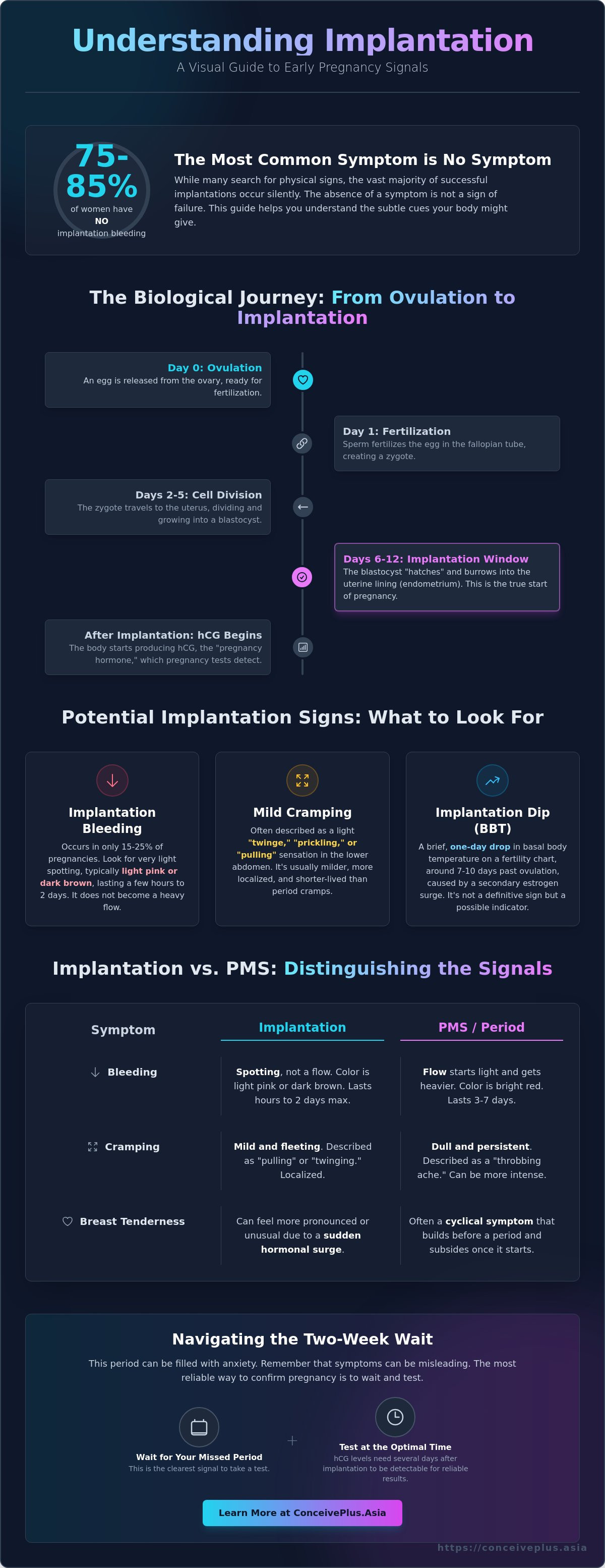
Did you know that while you are searching for every possible sign of conception, the most common symptom of a successful pregnancy is actually no symptom at all? It is easy to find yourself hyper-analyzing every physical twinge, but understanding implantation symptoms what to look for requires a mindful approach rather than a medicalized one. Research shows that implantation bleeding only occurs in about 15% to 25% of early pregnancies. This means that for the vast majority of people, the biological process is entirely silent; the absence of a physical sign isn't a sign of failure.
We understand that the two-week wait is often filled with deep anxiety and the constant, exhausting urge to compare mild cramping to your usual PMS. You deserve to navigate these early stages with confidence instead of confusion. In this article, you'll learn how to identify subtle biological signals, distinguish them from your monthly cycle, and understand the actual timeline of conception. We provide a clear checklist of what to expect and professional insights to help you maintain your peace of mind while you wait for a missed period to take a definitive test.
Key Takeaways
- Identify the critical implantation window, which typically occurs between 6 and 12 days after ovulation, to better understand your body's biological timeline.
- Learn the specific characteristics of implantation symptoms what to look for, including the distinct color of spotting and the unique "twinge" sensation of mild cramping.
- Recognize the "implantation dip" on fertility charts and how a secondary estrogen surge can cause a brief, one-day drop in basal body temperature.
- Distinguish between early pregnancy signals and PMS by comparing the intensity and duration of symptoms like breast tenderness and fatigue.
- Master practical techniques for managing anxiety during the two-week wait and determine the optimal time to test for the most reliable results.
Understanding the Implantation Window: When and Why it Happens
Implantation isn't a single moment; it's a sophisticated biological sequence. It begins when a blastocyst, a tiny cluster of cells, makes its way to the uterus and attaches to the endometrium. This microscopic event is the true start of pregnancy. Understanding the timeline helps you manage expectations when researching implantation symptoms what to look for. While many assume this happens immediately after conception, the process actually takes time. Most experts agree that the window of receptivity occurs between 6 and 12 days after ovulation (DPO).
This timing varies because every body follows its own rhythm. Factors like the exact moment of ovulation and the longevity of sperm can shift the calendar. Progesterone plays the starring role here. This hormone prepares the uterine lining, making it thick and nutrient-rich so the embryo can successfully burrow. This complex biological process is known as Implantation (embryology), and it requires perfect synchronization between the developing embryo and the mother's hormonal signals.
To better understand this concept, watch this helpful video:
The Biological Journey: From Fertilization to Attachment
The journey starts in the fallopian tube. Once an egg is fertilized, it becomes a zygote and begins a five-day trek toward the uterus. During this trip, it transforms into a blastocyst. Before it can attach, the embryo must "hatch" from its outer protective layer. Only then can it begin to burrow into the uterine wall. The moment this attachment is complete, your body starts producing human chorionic gonadotropin (hCG). This is the hormone that pregnancy tests detect, but levels take several days to become high enough for a positive result.
Predicting Your Window: Why Tracking Ovulation Matters
If you don't know when you ovulated, it is nearly impossible to know when to start looking for signs. Most people have a window of receptivity that lasts only about four days. If you have a standard 28-day cycle, your 6-12 DPO window usually falls during the third week of your cycle. To pinpoint your specific dates and reduce the stress of the two-week wait, you can use the Conceive Plus Ovulation Calculator. Identifying your peak fertility days helps you understand exactly when implantation is likely to occur. This gives you a clearer perspective on implantation symptoms what to look for without the guesswork.
Common Implantation Symptoms: What to Look For
Once the blastocyst begins its journey into the uterine lining, your body reacts to the microscopic changes through subtle physical cues. While every pregnancy is different, knowing the specific implantation symptoms what to look for can help you stay grounded during the two-week wait. These signs are often fleeting. They don't usually carry the same intensity as a full menstrual cycle, which is a key differentiator for many women. Understanding these nuances allows you to track your body's signals with greater accuracy and less stress.
The most discussed sign is Implantation bleeding, which occurs in approximately 15% to 25% of early pregnancies. Unlike a period, this spotting is typically light pink or dark brown. It never progresses to a heavy flow. You might also notice a unique type of cramping. Instead of the deep, throbbing ache of a period, implantation cramps often feel like a light "twinge" or a "pulling" sensation in the lower abdomen. These sensations are usually localized and short-lived.
Hormonal shifts also affect your cervical mucus. As progesterone levels rise to support the new pregnancy, your discharge may shift toward a thicker, creamy consistency. Additionally, your breasts might feel unusually sensitive or heavy. This happens because the sudden surge in hormones increases blood flow to the breast tissue almost immediately after attachment is complete.
Implantation Bleeding vs. Early Period
Distinguishing between spotting and a period is vital. Look closely at the color and consistency. Menstrual blood is typically bright red and may contain small clots, while implantation spotting is watery and stays pink or brown. The duration is another major clue. While a period lasts several days, implantation spotting usually lasts only a few hours to two days at most. It also tends to occur a few days before your expected period would normally begin.
Secondary Signs: Bloating, Nausea, and Mood
The "progesterone surge" that follows successful attachment can cause significant bloating, even before you can get a positive result on a test. Some women even report a wave of early nausea, often called "morning sickness," though it can happen at any time of day. This is caused by the rapid rise in hCG. You might also experience sudden, unexplained fatigue. Your body is working overtime to build the placenta and support the embryo, which can leave you feeling completely drained by mid-afternoon. To help your body during this demanding time, you can find supportive fertility-friendly products designed to assist your reproductive health.
The Implantation Dip: Using Basal Body Temperature (BBT)
Tracking your cycle doesn't just help you find your fertile window; it can also provide clues about what's happening after ovulation. One of the more technical implantation symptoms what to look for is the "implantation dip." This is a sudden, one-day drop in your basal body temperature (BBT) that occurs during the luteal phase, typically between 7 and 10 days post-ovulation. While your temperature usually stays elevated after ovulation due to progesterone, a secondary surge of estrogen can cause a brief dip before the temperature climbs back up. This estrogen surge is the body's way of preparing the uterine lining for the embryo's arrival.
If your chart shows a third level of sustained high temperatures after this dip, it's called a triphasic pattern. This is a much stronger indicator of pregnancy than a single dip alone. A triphasic chart suggests that your hormones have shifted again to support a developing embryo, adding a third "phase" of heat to your cycle. While exciting, this pattern usually only appears after implantation is fully complete and hCG levels have begun to rise.
How to Correctly Track BBT for Implantation
To see these patterns, you must use a specialized basal thermometer that measures to two decimal places. You need to take your temperature at the exact same time every morning, immediately upon waking, before you even sit up in bed. Consistency is the only way to distinguish a real hormonal shift from a random fluke. Even small movements can raise your body temperature and skew your data.
Keep in mind that BBT is extremely sensitive to your environment. If you didn't get enough sleep, drank alcohol the night before, or are dealing with a minor cold, your reading won't be accurate. These external factors often create "false dips" or spikes that can cause unnecessary stress during the two-week wait. If you have a disrupted night, it's often best to discard that day's temperature to keep your chart's trend clear.
Is a Dip Guaranteed? Managing Expectations
It's vital to remember that a temperature dip isn't a requirement for a healthy pregnancy. While it's an encouraging sign, data from fertility tracking studies suggests that only about 23% of pregnant charts show a clear implantation dip. Many people go on to have perfectly healthy pregnancies with a standard, biphasic chart that shows no dip at all. The absence of this specific sign doesn't mean you aren't pregnant.
Don't obsess over a single day's data point. Focus on the overall trend of your chart instead of individual fluctuations. If your temperatures stay above your cover line past the date your period is due, that's a far more reliable indicator than a one-day temperature drop. When you're assessing implantation symptoms what to look for, the big picture always matters more than the daily details. Your body's overall hormonal trend is the most honest story of your cycle.
Implantation vs. PMS: Distinguishing the Signals
The biggest challenge during the two-week wait is what experts often call the "Progesterone Problem." This hormone is responsible for almost every physical sensation you feel after ovulation, regardless of whether you're pregnant. Because progesterone rises in every healthy cycle to prepare the uterus for a potential embryo, it creates a nearly identical experience for both PMS and early pregnancy. When you're researching implantation symptoms what to look for, you'll find that the primary difference isn't the type of symptom, but rather the intensity and the trajectory of how those feelings evolve over several days.
In a typical menstrual cycle, PMS symptoms tend to intensify as your period approaches. The bloating, breast tenderness, and fatigue usually peak right before the bleed begins. If implantation has occurred, these symptoms are often much milder. They may even fluctuate, appearing one morning and disappearing by the afternoon. While PMS feels like a building storm that ends in a period, early pregnancy signs often feel like quiet, intermittent whispers that don't quite reach a crescendo. Ultimately, a missed period remains the only definitive signal that separates the two states.
The Symptom Comparison Framework
To help you distinguish between these overlapping signals, look at the specific quality of your physical sensations. PMS cramps are usually heavy, throbbing, and felt across the entire lower abdomen; they often signal that the uterine lining is preparing to shed. In contrast, implantation cramps feel more like light prickling, tingling, or a "pulling" sensation that might be localized to one side. Mood shifts also differ. Progesterone in PMS often leads to irritability or anger, while the hormonal shift in early pregnancy frequently trends toward heightened emotional sensitivity or unexplained weepiness. You should also be skeptical of "weird" cravings. While they're a famous pregnancy trope, true food aversions and cravings usually don't appear until well into the first trimester. If you're craving salty snacks right now, it's more likely a standard luteal phase response.
The 'No Symptom' Reality
It's completely normal to feel absolutely nothing during the two-week wait. Many people experience high levels of anxiety when they don't feel "different," but the reality is that many successful pregnancies involve zero noticeable signs during the first few weeks. Asymptomatic implantation is a common and healthy occurrence where the embryo attaches without triggering a perceptible physical reaction. If you aren't feeling any of the implantation symptoms what to look for, don't assume the cycle was unsuccessful. Your body might simply be more efficient at processing the hormonal shift. To support your reproductive health during this uncertain time, you can explore fertility-friendly support options that provide essential nutrients for early development.
Navigating the Two-Week Wait: Next Steps and Support
The two-week wait is often the most emotionally taxing phase of the conception journey. While you have spent days monitoring implantation symptoms what to look for, the mental load of uncertainty can lead to significant anxiety. It is helpful to remember that your body is currently performing a complex biological task that requires time, not just observation. Shifting your focus toward practical distraction techniques, such as starting a new book or planning low-stress social activities, can help the days pass more quickly. Many people find comfort in reading real success stories and reviews from others who have navigated this exact period of waiting and emerged with positive results.
Testing too early is one of the most common sources of unnecessary heartbreak. While some highly sensitive tests claim to detect pregnancy days before a missed period, testing before 12 to 14 days post-ovulation (DPO) often results in a false negative. This happens because your body needs time to produce enough human chorionic gonadotropin (hCG) to be detected in urine. Even if implantation was successful, your hCG levels might not be high enough yet. Waiting until the day of your expected period ensures that the results you see are reliable and accurate.
The Best Time to Test
For the most accurate results, the gold standard is to wait until 14 DPO or the first day of a missed period. If you decide to test early, always use your first morning urine. Research indicates that hormone concentrations are highest at this time, making it easier for a home test to pick up the developing signal. If you see a faint line, it is generally considered a positive result, as the test has detected the presence of hCG. Since this hormone typically doubles every 48 to 72 hours in early pregnancy, a line that gets darker over several days is a strong indicator of a healthy, progressing attachment.
Supporting a Healthy Implantation Environment
Optimizing your body during the two-week wait involves more than just watching for implantation symptoms what to look for; it requires active nutritional support. Folic acid and prenatal vitamins are essential during these first few weeks, as they provide the building blocks for neural tube development. It is also wise to "act pregnant" by avoiding alcohol and smoking as soon as you suspect conception may have occurred. Providing your body with consistent, high-quality nutrients can create a more receptive environment for the developing embryo. You can explore Conceive Plus Support Bundles to ensure you are getting comprehensive fertility nutrition tailored for this critical window. By focusing on your health and well-being, you can navigate the final days of the wait with a sense of control and confidence.
Moving Forward with Confidence in Your Journey
Understanding the subtle biological shifts of early pregnancy helps replace anxiety with clarity. You now know that the window of receptivity is narrow and that many successful implantations occur without any noticeable physical signs. By focusing on the overall trend of your cycle rather than daily fluctuations, you can better interpret implantation symptoms what to look for while waiting for a definitive test result. Patience is your greatest tool during this time, alongside a healthy environment for your developing embryo.
Preparing your body for this critical stage is just as important as tracking it. You can support your journey with Conceive Plus Fertility Bundles to provide the nutritional foundation your body needs. These products are scientifically formulated for reproductive health and have been trusted by millions of couples since 2008. Recommended by doctors in over 70 countries, they offer a reliable way to optimize your health during the two-week wait. Stay patient and trust your body's process. Your journey toward parenthood is unique, and you're now better equipped to navigate every step with peace of mind.
Frequently Asked Questions
How long after implantation do symptoms start?
Symptoms typically begin 2 to 4 days after the attachment process is complete. While the actual burrowing of the embryo is microscopic, the subsequent rise in hCG and progesterone triggers systemic changes like nausea or breast sensitivity. Most people won't notice these shifts until several days later when hormone levels are high enough to affect the body's baseline.
Can you have implantation symptoms and not be pregnant?
Yes, it's very common to experience these sensations without being pregnant. Since progesterone rises after every ovulation, it creates symptoms like bloating and fatigue regardless of whether an egg was fertilized. This is why searching for implantation symptoms what to look for can be confusing; your body is often reacting to the standard hormones of your regular menstrual cycle.
Is it possible to feel the egg attach to the uterus?
You cannot physically feel the embryo attach because the blastocyst is a microscopic cluster of cells. Any sensations you notice, such as light twinges or a "pulling" feeling, are the result of hormonal shifts or uterine muscle reactions rather than the physical act of attachment. The process doesn't involve enough tissue disruption to be felt directly by the nervous system.
What does implantation discharge look like?
Implantation discharge usually appears as a thicker, creamy white consistency or a very light pink or brown spotting. It shouldn't have a strong odor or cause itching, which would instead indicate an infection. This change is caused by increased progesterone levels that alter the texture of your cervical mucus to protect the uterine environment during early development.
Can implantation feel like a 'vibrating' or 'bubbling' sensation?
Some people describe a "vibrating" or "bubbling" feeling in their lower abdomen, but these aren't medically recognized signs of conception. These sensations are more likely related to increased blood flow to the pelvic region or simple digestive activity. While these are common anecdotes in fertility communities, they don't provide reliable evidence that an embryo has successfully attached.
What should I do if I have heavy bleeding instead of spotting?
If you experience heavy bleeding with a bright red flow or clots, it's likely your menstrual period rather than implantation. Implantation spotting is always light and doesn't require a pad or tampon. If the bleeding is accompanied by severe one-sided pain or dizziness, contact a healthcare provider immediately to rule out an ectopic pregnancy or other complications.
Does every woman experience implantation cramping?
No, not every woman experiences cramping or any other physical sign during the two-week wait. Many successful pregnancies occur with absolutely no physical cues during the first few weeks. If you don't feel any implantation symptoms what to look for, it doesn't mean you aren't pregnant; it simply means your body is processing the hormonal shift without a perceptible physical reaction.
How soon after implantation will a pregnancy test be positive?
A pregnancy test will usually turn positive about 2 to 4 days after implantation is complete. It takes this long for the developing embryo to produce enough hCG to be detected in your urine. For the most reliable result, wait until the day of your missed period to ensure the hormone concentration has reached the test's detection threshold.


