
How to Stay Positive During the Two-Week Wait: A Mindful Guide to TWW Sanity


What if the most productive thing you can do for your fertility this month has nothing to do with a thermometer or a test strip? Most people treat the luteal phase as a period of breath-holding, but viewing this time as a passive gap is a mistake that often leads to burnout. You're likely exhausted by the symptom spotting spiral, where every minor cramp or wave of fatigue feels like a definitive sign. It's a grueling emotional rollercoaster that can strain your relationships and steal your sleep, leaving you feeling completely out of control.
We understand that the urge to analyze every twinge is overwhelming, especially when you're waiting for hCG levels to rise high enough for a clear result. Learning how to stay positive during the two-week wait isn't about forced optimism; it's about reclaiming your mental space. This guide offers a structured plan to transform your anxiety into empowered nesting. You'll discover actionable psychological strategies and wellness rituals designed to manage the urge to test early and help you maintain your sanity until you can finally reach for that pregnancy test.
Key Takeaways
- Understand why early pregnancy and PMS symptoms are biologically identical to help you break the cycle of obsessive symptom spotting.
- Implement fertility-friendly habits that prioritize uterine blood flow and proper hydration to support your body during the implantation window.
- Master actionable psychological tools like the Worry Window technique to learn how to stay positive during the two-week wait.
- Establish a mindful testing plan by following the 12-14 DPO gold standard to protect your emotional health from the stress of early testing.
What is the Two-Week Wait (TWW) and Why is it So Difficult?
The time between ovulation and your expected period is colloquially known as the two-week wait. Biologically, What is the Two-Week Wait (TWW) refers to the luteal phase of your menstrual cycle. It's often the most grueling part of the fertility journey because the active effort of tracking and timing ends, leaving you in a state of forced patience. You've done the work; now you're just waiting for a biological signal that you cannot yet control.
To better understand the complexities of this phase and how to manage the stress, watch this helpful video:
The biological waiting game is a delicate process of embryo travel and implantation. Even if fertilization is successful, it takes time for your body to realize it. This delay is the primary source of anxiety. You're looking for answers that your body isn't ready to give yet. Learning how to stay positive during the two-week wait requires understanding that this silence isn't a sign of failure. It's simply the time required for your hormones to shift and for an embryo to make its home.
The Science of the Luteal Phase
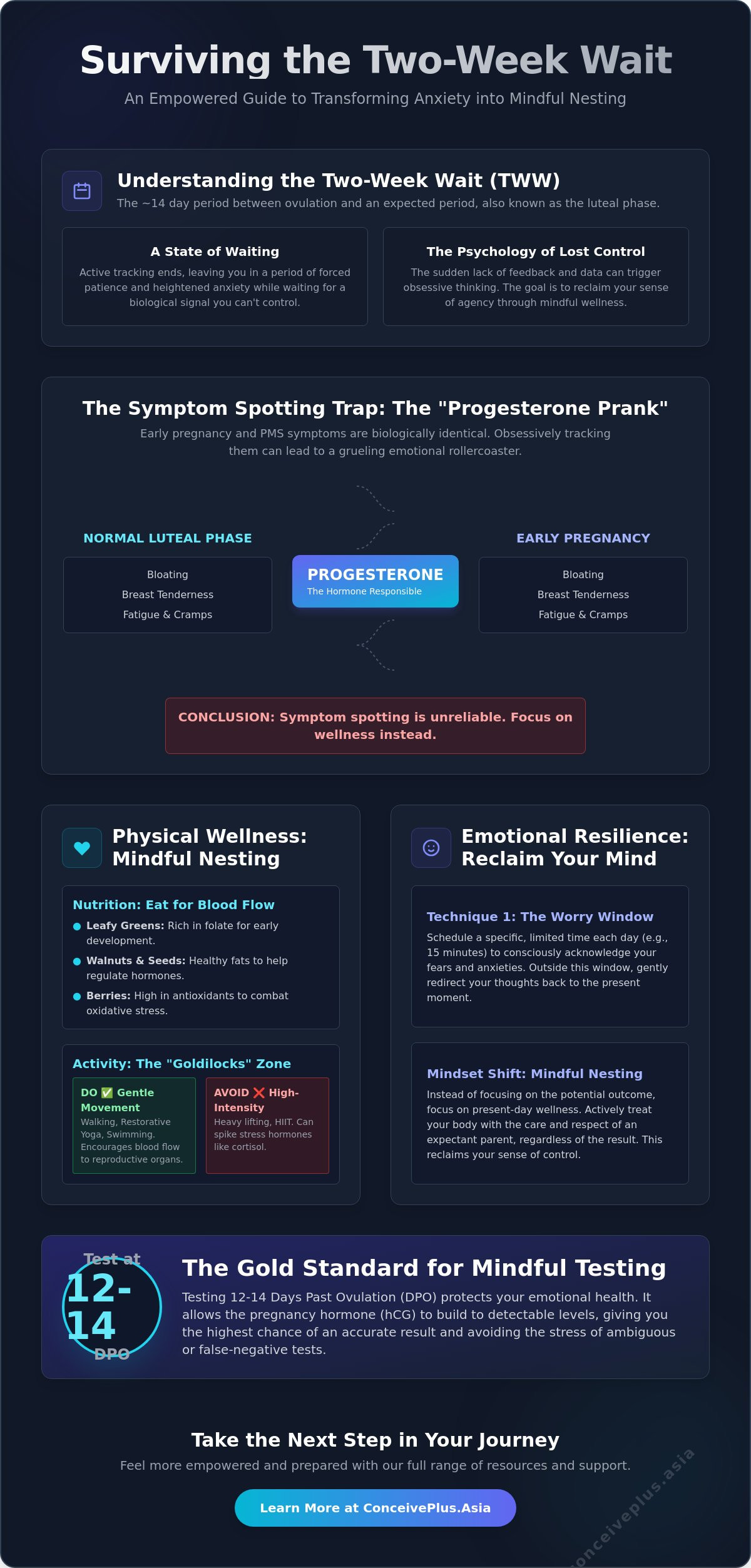
After ovulation, the follicle that released the egg transforms into the corpus luteum. This temporary gland produces progesterone, which is essential for thickening the uterine lining. An embryo typically takes six to twelve days to travel to the uterus and implant. Only after implantation does the body produce human chorionic gonadotropin (hCG). Because hCG levels need time to build up to detectable levels, testing before 12 or 14 days past ovulation often leads to confusing results. Progesterone also mimics pregnancy symptoms like bloating and breast tenderness, leading to a "progesterone prank" where you feel pregnant even when you aren't.
The Psychology of 'Losing Control'
The TWW is difficult because medical monitoring and data collection often stop. If you've been using an ovulation calculator or visiting a clinic, the sudden lack of feedback can trigger "all-or-nothing" thinking. You might find yourself obsessing over a single twinge, deciding you're "definitely out" before the wait is over. Shifting your mindset toward "Mindful Nesting" helps. This concept encourages you to treat your body with the care of an expectant parent today. It helps you master how to stay positive during the two-week wait by reclaiming your sense of agency and focusing on wellness rather than just the outcome.
Physical Wellness: Nourishing Your Body for Potential Implantation
Shifting your focus to physical wellness is a powerful way to manage the uncertainty of the luteal phase. Instead of passively waiting for a result, you can actively create an environment that supports uterine health and blood flow. This proactive approach is a core part of how to stay positive during the two-week wait. When you treat your body as a temple for potential life, you move from a state of anxious observation to one of empowered preparation.
Maintaining a "Goldilocks" zone for physical activity is essential during this time. While high-intensity interval training or heavy lifting might spike cortisol, total inactivity can lead to sluggish circulation. Opt for gentle movement like walking, restorative yoga, or swimming. These activities encourage blood flow to the reproductive organs without putting excessive stress on the body. You can find more practical tips for the two-week wait regarding activity levels and general do's and don'ts from industry experts.
Nutrition and Hydration for the TWW
Your diet during these 14 days should prioritize anti-inflammatory ingredients that support a healthy uterine lining. While the idea of "eating for two" is premature, "eating for blood flow" is a scientific reality. Focus on foods rich in omega-3 fatty acids and antioxidants. Consider these nutrient-dense options for your daily routine:
- Leafy Greens: Spinach and kale provide folate, which is critical for early development.
- Walnuts and Seeds: These offer healthy fats that help regulate hormones.
- Berries: High in antioxidants to combat oxidative stress in the body.
Hydration is equally vital. Proper fluid intake ensures that your blood volume stays optimal, which is necessary for nourishing the uterine lining. If you experience mid-wait energy slumps, reach for a snack like Greek yogurt with berries or a handful of almonds rather than sugary treats that cause insulin spikes.
The Proactive Self-Care Ritual
Integrating specific wellness rituals can provide a sense of control when things feel chaotic. Using fertility support bundles can be a helpful way to ensure you're providing your body with the right balance of vitamins and minerals. Continuing your prenatal vitamin regimen is non-negotiable; your body needs those nutrients well before a positive test appears on a screen. This consistency helps you feel that you're doing everything within your power to support a successful outcome.
Lowering your cortisol levels is just as important as your physical intake. Create a "zen space" at home, perhaps a quiet corner with a comfortable chair and soft lighting, where you can spend ten minutes each day in stillness. This practice helps ground your nervous system and reinforces how to stay positive during the two-week wait. If you're looking for more ways to support your journey, exploring high-quality fertility resources can provide the additional guidance you need to feel confident.
The Symptom Spotting Trap: Distinguishing PMS from Pregnancy
You wake up and notice your breasts feel unusually heavy. Immediately, your mind starts racing. Is this a sign of success, or is it just your period approaching? This mental tug-of-war is the heart of the symptom spotting trap. It's an exhausting cycle that turns every minor physical sensation into a high-stakes clue. Understanding the biological reality of your body can help lower the volume on these intrusive thoughts. Learning how to stay positive during the two-week wait requires accepting that, for now, your body is keeping its secrets.
The primary reason for this confusion is progesterone. As discussed earlier, the corpus luteum produces this hormone to prepare the uterine lining. Progesterone is responsible for bloating, breast tenderness, fatigue, and even mood shifts. Because your body produces progesterone in the second half of every cycle regardless of conception, these symptoms are biologically identical to PMS. If you're taking progesterone supplements as part of a fertility protocol, these sensations are often amplified, creating a "Progesterone Prank" that can lead to false hope.
PMS vs. Early Pregnancy: The Overlap
Distinguishing between the two is nearly impossible without a test. Breast tenderness, for instance, occurs in both scenarios because of hormonal fluctuations affecting the milk ducts. Fatigue is another common overlap; progesterone is a natural sedative that can make you feel drained whether you're pregnant or not. Many people desperately search for implantation bleeding, but data indicates it only occurs in approximately 30% of women. If you don't see it, it doesn't mean you aren't pregnant. Symptom spotting is a psychological coping mechanism used to gain a sense of certainty in an uncertain time, rather than a reliable medical diagnostic.
Managing the Urge to Over-Analyze
It's easy to fall into a "Google spiral" the moment you feel a twinge in your abdomen. To break this habit and master how to stay positive during the two-week wait, try implementing the "5-Minute Rule." Give yourself five minutes to acknowledge the sensation and check your body. Once the timer is up, you must move on to a different, engaging task. This prevents the sensation from dominating your entire afternoon.
Remember that your "gut feeling" is frequently just a reflection of your current anxiety level. When stress is high, your brain is more likely to interpret neutral data as significant. If you find yourself obsessing over what "normal" looks like, reading real user reviews can be incredibly grounding. You'll see a vast diversity of experiences, proving that there's no single "right" way to feel during this window. This perspective helps you step back from the microscope and breathe.
5 Daily Strategies for Emotional Resilience and Positivity
Knowing the biological reasons for your symptoms helps, but managing the emotional weight of 14 days requires a daily structure. Without a plan, your mind will naturally drift toward worst-case scenarios. Learning how to stay positive during the two-week wait is about building a mental fortress that protects your peace from morning until night. These five strategies offer a way to contain your anxiety so it doesn't take over your entire life.
One of the most effective tools is the 'Worry Window.' Instead of trying to suppress your fears all day, schedule 15 minutes in the afternoon specifically for anxiety. When a stressful thought pops up at 10 AM, tell yourself, "I'll think about that during my window." This gives your brain permission to let go for the moment. Combine this with 'High-Flow' hobbies; activities like complex puzzles, learning a new language, or coding require total mental presence. When your brain is in a flow state, it's impossible to hyper-fixate on minor body changes.
A digital detox is equally critical. Social media algorithms often feed you content that triggers comparison, which is the enemy of positivity. If seeing pregnancy announcements or ultrasound photos makes your heart sink, it's time to step away. Mute specific hashtags or accounts that make you feel 'less than' during this window. Your focus should remain on your own path, not a curated version of someone else's.
Mindfulness and Cognitive Reframing
When panic starts to rise, use the 'Box Breathing' method to reset your nervous system. Inhale for four seconds, hold for four, exhale for four, and hold for four. This physical technique signals to your brain that you aren't in danger. Pair this with cognitive reframing. Instead of asking, "What if it failed?", try saying, "Right now, I am doing everything I can to support my body." Keeping a 'Gratitude for my Body' journal can also shift your focus. Write down three things your body did well today, like getting you through a walk or keeping you hydrated.
Social Boundaries and Protection
Protecting your emotional space often means setting boundaries with others. You don't owe anyone an update on your cycle. If well-meaning friends ask intrusive questions, use a scripted response: "I'm focusing on my wellness right now and will share news when I'm ready." It's perfectly okay to 'mute' the world while you wait. If you need a community that understands exactly what you're going through without the pressure, visit the Conceive Plus blog for shared stories and expert advice. Surrounding yourself with supportive, low-pressure resources is essential for how to stay positive during the two-week wait.
If you're looking for more ways to support your journey with science-backed tools, explore our full range of fertility support options to help you feel prepared and empowered.
The End of the Wait: Testing Mindfully and Moving Forward
The final days of the luteal phase often feel like the steepest part of the climb. You've built your resilience and managed your symptoms, but the urge for a definitive answer is powerful. Setting a firm test date is the final step in learning how to stay positive during the two-week wait. While many modern tests claim to provide results several days before a missed period, 12 to 14 days past ovulation (DPO) remains the gold standard for accuracy. Testing earlier can lead to the emotional whiplash of a false negative or the confusion of a chemical pregnancy that might have otherwise gone unnoticed.
Sticking to your chosen date prevents the "serial testing" habit that often fuels anxiety. If you test on 10 DPO and get a negative, you'll likely tell yourself it's just too early and test again the next morning. This creates a daily cycle of hope and disappointment. By waiting until 14 DPO, you're giving your body enough time to produce detectable levels of hCG, ensuring that whatever result you see is as reliable as possible. This patience is a final act of self-care for your mental health.
The Logistics of Testing
When the day finally arrives, using First Morning Urine (FMU) is vital for early detection. This is when hCG is most concentrated in your system. If you test later in the day after drinking water, the hormone may be too diluted to trigger a positive result. You should also be aware of evaporation lines. These are colorless streaks that appear as the test dries; they're often mistaken for faint positives, leading to significant heartbreak. A true positive result will almost always show a distinct hint of pink or blue color. If the test is negative and your period hasn't arrived, using an ovulation calculator can help you determine if your timing was slightly off or when you should expect your next cycle to begin.
Self-Compassion After the Result
Preparing for both outcomes before you see the result is a vital strategy for how to stay positive during the two-week wait. If the result is negative, implement the "48-Hour Rule." This means giving yourself two full days to process the disappointment before you start analyzing the next cycle or making new medical appointments. This window allows you to feel your emotions without the pressure of immediately "fixing" the situation. Communicate with your partner beforehand about how you want to receive the news. Some people prefer to look at the test together, while others need a few minutes of solitude first.
Remember that a single negative cycle is a data point, not a final verdict on your fertility. Your journey is a marathon, not a sprint, and your worth isn't tied to a plastic stick. Whether you're celebrating or grieving, treat yourself with the same kindness you would offer a dear friend in the same position. This self-compassion is what will ultimately sustain you as you move forward into whatever comes next.
Reclaiming Your Peace on the Path to Parenthood
The two-week wait is undoubtedly one of the most challenging phases of any fertility journey, but it doesn't have to be defined by anxiety. By understanding the biological role of progesterone and implementing structured daily rituals like the "Worry Window," you can effectively break the cycle of obsessive symptom spotting. Mastering how to stay positive during the two-week wait is less about forcing a smile and more about reclaiming your sense of agency through mindful nesting and physical wellness.
As you navigate these 14 days, remember that you're part of a vast, supportive community. Our physician-recommended fertility support is trusted by millions of people in over 70 countries. We invite you to support your journey with our specialized fertility bundles and read real success stories from those who have walked this path before you. Whether this cycle brings a celebration or a new plan, your commitment to your well-being is the most important foundation you can build. Stay kind to yourself; your resilience is your greatest asset.
Frequently Asked Questions
How can I tell the difference between PMS and pregnancy during the TWW?
Distinguishing between PMS and early pregnancy is biologically impossible until your body produces enough hCG for a test to detect. Both conditions are driven by the hormone progesterone, which causes identical symptoms like bloating, breast tenderness, and mood swings. You won't experience unique pregnancy sensations until after implantation occurs, meaning any "signs" felt before 10 DPO are likely just the normal functions of your luteal phase.
Is it okay to exercise while waiting to see if I'm pregnant?
Moderate exercise is safe and actually encouraged to help manage stress and maintain healthy blood flow. Stick to familiar routines like walking, swimming, or prenatal-safe yoga. It's best to avoid starting a new high-intensity training program or engaging in contact sports that carry a risk of abdominal trauma. Listening to your body's energy levels is key during this time of potential early development.
When is the earliest I can take a pregnancy test for an accurate result?
While some early-detection tests claim to work as early as 10 DPO, waiting until 12 to 14 DPO provides much higher accuracy. Testing too early often leads to false negatives because the embryo may not have implanted yet, or hCG levels haven't reached a detectable threshold. Waiting for your missed period ensures the results are reliable and helps you avoid the emotional rollercoaster of ambiguous faint lines.
Can stress during the two-week wait prevent implantation?
Normal levels of anxiety or day-to-day stress won't typically prevent a healthy embryo from implanting. The biological process of implantation is remarkably resilient. While chronic, severe stress can impact your overall health, the common "wait-and-see" jitters aren't a medical threat to success. Understanding how to stay positive during the two-week wait is primarily about your own mental comfort and long-term emotional health rather than a requirement for conception.
Why am I experiencing cramping 7 days after ovulation?
Cramping around 7 DPO is quite common and can be attributed to several factors. It might be related to the embryo attaching to the uterine wall, often called implantation cramping, but it's also a standard symptom of the luteal phase as the uterus prepares for a period. Since these sensations overlap, a single day of cramping isn't a definitive sign of pregnancy and should be viewed as a neutral biological event.
What should I avoid eating or drinking during the two-week wait?
It's wise to treat your body as if you're already pregnant by limiting alcohol and high caffeine intake. Avoid unpasteurized dairy products, raw sprouts, and undercooked meats to minimize the risk of foodborne illnesses. Focus on a balanced diet rich in folate and anti-inflammatory whole foods. Staying well-hydrated with water and electrolyte-rich fluids supports the healthy blood volume needed for a potential pregnancy.
How do I stop symptom spotting every time I feel a twinge?
To break the cycle of over-analysis, try the "Worry Window" technique where you only allow yourself 15 minutes a day to think about your symptoms. When you feel a twinge outside that time, acknowledge it and immediately pivot to a "high-flow" activity like a complex puzzle or an engaging book. Learning how to stay positive during the two-week wait involves training your brain to focus on the present moment rather than interpreting every physical sensation.
Is implantation bleeding a guaranteed sign of pregnancy?
No, implantation bleeding is not a guaranteed sign and only occurs in approximately 30% of successful pregnancies. Many women experience a completely "dry" wait with no spotting at all before receiving a positive test. Conversely, light spotting can also occur just before a period starts. Because it's relatively rare and easily confused with other cycle changes, it shouldn't be used as a primary indicator of your status.


